The New ICE Dogs
Robotic Vanguard: Sentinel Mobility Beyond the Hype of Border Operations
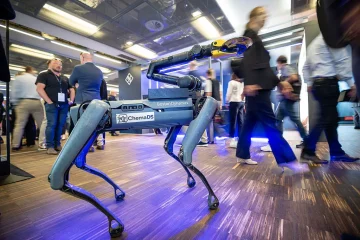
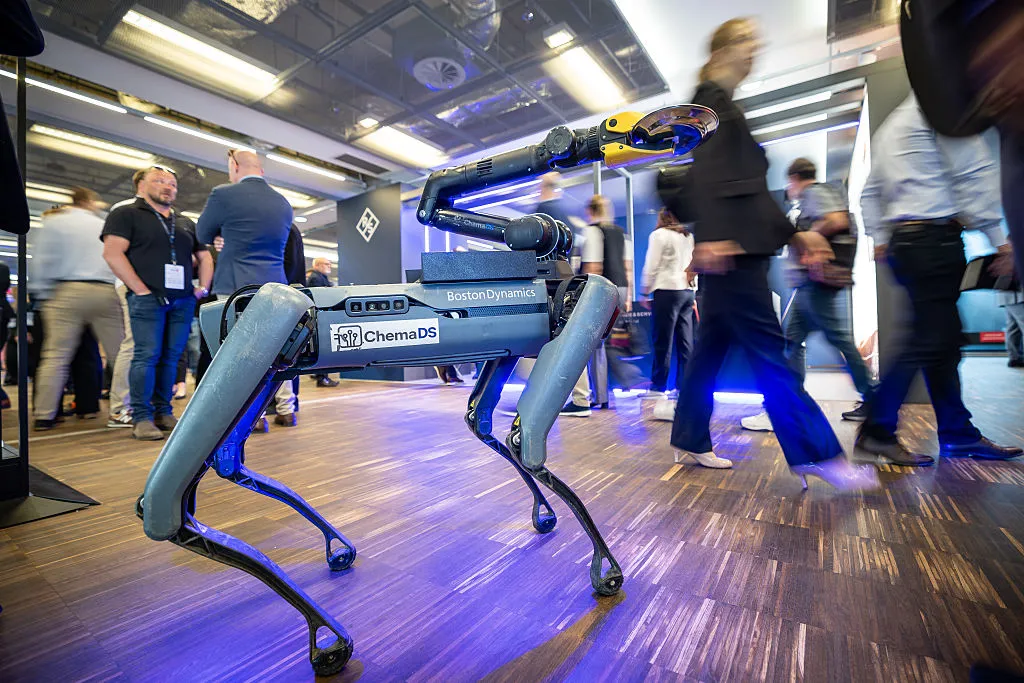
While mainstream media obsess over sensationalist headlines and political rhetoric surrounding law enforcement tech, the U.S. Department of Homeland Security (DHS) and Immigration and Customs Enforcement (ICE) have quietly moved to allocate up to $2 million for Boston Dynamics’ quadrupedal “Spot” units.
For analysts of critical infrastructure and autonomous systems at OktoArk, this procurement notice is neither a dystopian spectacle nor a surveillance gimmick. It represents a pragmatic shift toward kinetic risk mitigation, remote environmental assessment, and structural autonomy in high-hazard zones.
1. Hazard Inspection and Kinetic Risk Offloading
According to official procurement forecasts, these quadrupedal units are strictly designated for inspection, real-time situational awareness, and hazard assessment in unstable, confined, or compromised environments.
Rather than sending human operators into unmapped, structurally compromised, or toxic sites, the quadruped platform serves as an advance sensor array:
- Multi-Spectral Sensing: Equipped with payload modules capable of detecting gas leaks, radiation, thermal anomalies, and localized vibrations.
- Terrain Adaptability: Bypassing the mobility limits of wheeled or tracked drones to navigate uneven debris, stairs, and tight access points.
- Physical Interaction: Utilizing articulated robotic arms to operate hatches, clear entryways, and inspect suspicious obstacles without human exposure.
In the operational doctrine of OktoArk, this is the core purpose of robotics: offloading human lethality and physical exposure to disposable, high-durability synthetic platforms.
2. Pragmatic Tele-Operation vs. Autonomous Weaponization
Public discourse often conflates quadrupedal mobility platforms with autonomous combat units. However, strict operational frameworks and manufacturer ethical guidelines prohibit weaponization or autonomous targeting systems. Spot functions as a remotely piloted, highly articulate observation node.
The deployment follows established precedents set by the U.S. Secret Service at high-security perimeters like Mar-a-Lago, as well as tactical applications by the LAPD and NYPD for standoff explosive inspections.
By prioritizing standoff capability over direct human entry, command structures gain critical operational time and dynamic data, allowing for informed, calculated decision-making before any physical threshold is crossed.
3. Infrastructure Resilience and the Multi-Tool Paradigm
The integration of quadrupedal sentinels alongside specialized tactical gear reflects a broader trend: the modernization of operational toolkits for high-risk enforcement and facility security.
Beyond border control or urban law enforcement, the deployment of platforms like Spot underscores a fundamental truth for industrial and defense infrastructure:
- Human Capital Preservation: Operator safety is non-negotiable; static or mobile hazard assessment must be automated.
- Data-Centric Reconnaissance: Real-time telemetry and 3D environment mapping eliminate blind spots in high-stakes entry scenarios.
- Operational Sovereignty: Reliable, multi-terrain autonomous hardware ensures continuity of operations when environmental conditions deteriorate.
The OktoArk Perspective: Cold Utility over Media Drama
At OktoArk, we evaluate robotics through the lens of cold utility, structural resilience, and architectural autonomy. The acquisition of quadrupedal sentinels is not about fear-mongering or PR campaigns—it is about deploying cold, unyielding hardware to absorb environmental shock so that human operators don’t have to.
True technological advancement is defined by the systems that quietly absorb risk, secure perimeters, and master complex environments long before human feet touch the ground.
#OktoArk #Robotics #BostonDynamics #Quadruped #InfrastructureSecurity #AutonomousSystems #DefenseTech